
To fully savor the rich and profound insights of the Bible, it is essential to approach its stories with a well-defined perspective. Acquiring a deep understanding of ancient mythology and astrology becomes imperative, as these disciplines provide the essential keys to unlock the spiritual depth the scriptures were designed to impart. This article serves as a concise yet comprehensive guide, offering insights into how to decode biblical prophecies through the lens of mythological symbolism and astrological knowledge. By intertwining these threads, we can uncover hidden connections and profound truths. Our focus in this piece will delve into the realms of Norse mythology and Babylonian astrology.
In Norse mythology, the concept of the “doom of the gods,” known as Ragnarök, signifies the culmination of days. This evocative term symbolizes humanity’s liberation from the constricting forces of celestial and planetary influences. As we delve into this topic, we begin to discern the rationale behind the Bible’s designation of the spiritually awakened as “Israel,” a term that embodies the idea of persevering and prevailing against both divine and human challenges.
Spiritual narratives are intricately tied to the rhythmic dance of the sun. The sun is often perceived as the embodiment of human consciousness, while the zodiac signs serve as symbolic representations of life’s diverse stages, the obstacles to conquer, and the essential skills to master. As the spring Equinox unfurls its grace, light triumphs over darkness, and daylight extends its embrace a touch further than the night’s shadows. This juncture holds significance as it ushers in a time of shedding the shadowy influences of past lives and the orchestrator of death itself.
Within biblical texts, this moment aligns with Passover, where the blood of a ram is smeared upon doorposts. A profound symbolism emerges in the Hebrew word for blood, “dahm,” which translates to “likeness.” This underlines the concept of God’s essence, akin to consciousness, entering the womb of creation, signified by the doorpost. The ram’s blood aligns with the constellation of Aries, encapsulating this sacred transition.
Amid this celestial transition, cattle and flocks bring forth their offspring, and fields awaken with new life. In the realm of Babylonian astrology, Aries manifests as the image of a youthful ram often referred to as “the hired man.” This symbolism might arise from the notion of the divine likeness, represented by Elohiym energy, inhabiting a mortal vessel. This vessel undertakes the role of a steward and guardian of the Earth’s treasures, entrusted with its care.
This very ram recurs in the enchanting tale of the Golden Fleece, a narrative woven into the exploits of Jason and the Argonauts. Furthermore, a subtle allusion echoes in the Bible, where Joseph’s coat of many colors, crafted from the skin of the flock, mirrors the radiant hues of the sun, auras, and even the Sirius star.
Joseph’s blessing from his father reflects springtime themes. His sons represent the first zodiac signs emerging from the spring Equinox. This positioning among the zodiac is mirrored in Genesis 49:22-26, where Joseph is likened to a fruitful bough
Babylonian Star Map
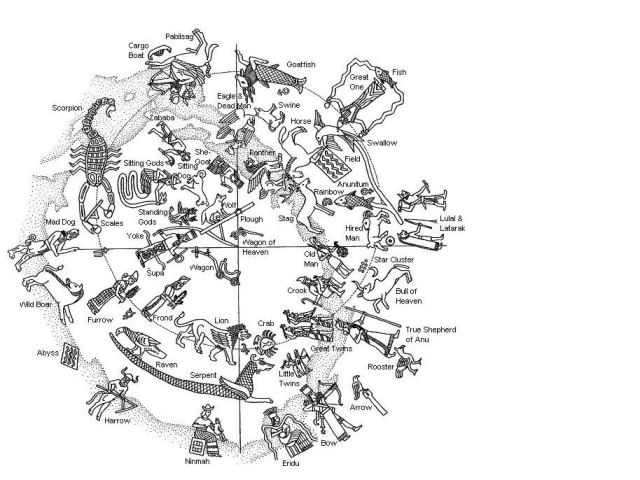
The Hired Man

22 Joseph is a fruitful bough, even a fruitful bough by a well; whose branches run over the wall: 23 The archers have sorely grieved him, and shot at him, and hated him: 24 But his bow abode in strength, and the arms of his hands were made strong by the hands of the mighty God of Jacob; (from thence is the shepherd, the stone of Israel:) 25 Even by the God of thy father, who shall help thee; and by the Almighty, who shall bless thee with blessings of heaven above, blessings of the deep that lieth under, blessings of the breasts, and of the womb: 26 The blessings of thy father have prevailed above the blessings of my progenitors unto the utmost bound of the everlasting hills: they shall be on the head of Joseph, and on the crown of the head of him that was separate from his brethren.
In this passage, we encounter the evocative imagery of fruitful boughs and the symbolic mention of crowns atop the heads of his brothers. This tableau subtly places him among the constellations of the zodiac. We shall revisit these verses later, as we venture further into the tapestry of Babylonian texts, exploring the constellations of spring.
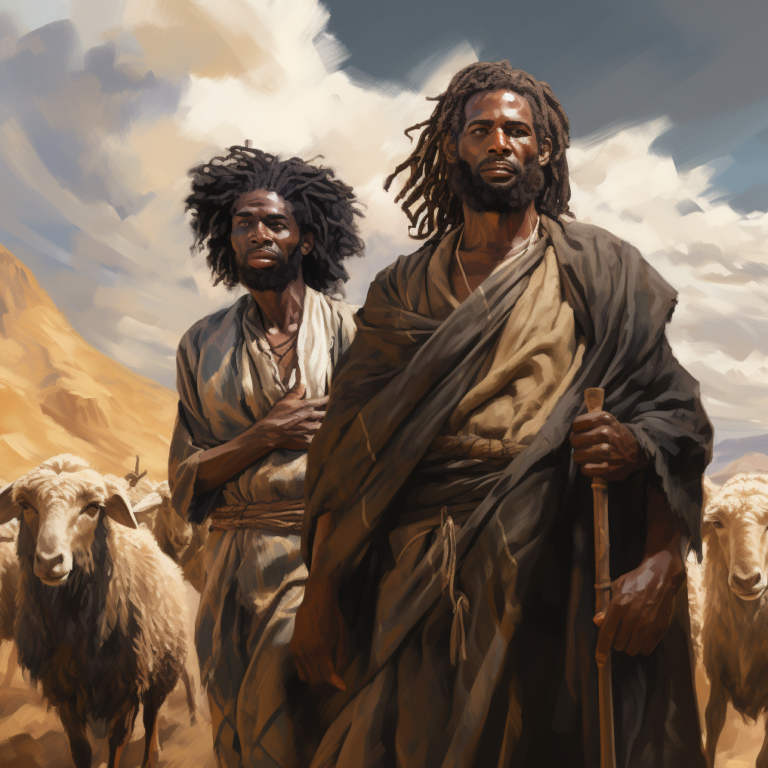
Next, we encounter the constellation of the crook, a depiction of a shepherd tenderly cradling a lamb. This portrayal is emblematic of a shepherd king, a ruler who diligently oversees and safeguards his flock, signifying his care for his people. The crook becomes a divine emblem of a king’s regalia, symbolizing the mantle of rulership bestowed upon him by the Divine. This echoes the story of Adahm, the one granted dominion by God, crafted in the Divine’s likeness and bestowed with pure consciousness—the Neshamah—later evolving into a soul with desires.
In the tapestry of biblical narrative, King David emerges as a poignant embodiment of this Aries constellation. Both he and Jesus are renowned as Shepherd Kings, entrusted with divine rulership and connected intimately to the Divine itself. This envisions the revered Order of Melchizedek, a melding of kingly dominion in the physical realm and priestly dominion within the spiritual realm. “Melchi,” signifying “my king,” and “Zedek,” representing righteousness, encapsulate the essence of this profound connection.
Zedek literally means alignment, and it signifies the one who harmonizes the spiritual realm, awash with light, with the physical world that emerges from the shadows—a concept embodied in the spring equinox.
In ‘Babylonian Star-Lore,’ Galvin White illuminates the crook constellation’s connection with Dumuzi. The shepherd’s crook symbolizes the regal attributes and the divine authority to govern. This association gains significance as the celestial Crook ascends in the first month, coinciding with the king’s inauguration and his empowerment by the gods. The imagery of the shepherd-king naturally converges with Dumuzi, now matured into a young man, on the threshold of uniting with a goddess in the Sacred Marriage ritual. Through this sacred union, the king—merged with Dumuzi—cements his rightful sovereignty and ensures the fecundity of his realm.”
Dumuzi and Tammuz are interchangeable names representing the deity who weds Inanna, also known as Ishtar—the divine embodiment of Venus, the lady of heaven, love, and sensuality. A tale unfolds where Dumuzi, akin to David and Abigail’s narrative, competes against a farmer for Inanna’s affection. A parallel to this is the story of Eve consuming the forbidden fruit and offering it to Adahm, leading to their expulsion from the Garden of Eden—a journey into an alternate reality woven by our subconscious mind. It’s noteworthy that according to Adahmic Yoga, Eve embodies Venusian energy, while Adahm represents Mars; a connection further emphasized by ‘Dam’ in Hebrew signifying redness.
This brings us to the figure of David, a warrior who personifies the energy of Mars, often described as ‘red.’ The Crook constellation signifies Dumuzi’s entry into Taurus, a realm ruled by Venus. David, an embodiment of Mars, pursues marriage with Michal, whose name reflects a nature akin to Inanna—Lady of Heaven. However, Michal is given to Palti by her father Saul, defying the promise to David. Additionally, in Aries and Taurus, constellations called the Old Man depict an entity wielding a staff and the head of a demon. This imagery is akin to David brandishing a sword while holding the severed head of Goliath.
Derived from ‘gala,’ meaning ‘to uncover’ or ‘reveal,’ Goliath represents a colossal challenge—symbolizing the conquest of inner demons and negative attributes that bind us within the cycle of existence. The demon Gala from the Dumuzi narrative serves as a reference. The underworld, a realm of death and the subconscious, embodies Tehumian energy housing our inner demons. Goliath, akin to the massive giant, embodies the daunting task of overcoming these obstacles, a feat necessary for Mars energy to prevail. Mars, embodying the Elohiym energy, transcends the confines of inertia-driven subconscious forces. It possesses the traits of ambition, the transformation of ideas into actions, a fervent will to succeed, assertiveness, and primal desires.
For instance, Adahm/David/Mars embodies an unconstrained conscious force, unaffected by inhibitions. It represents the conqueror and acts as a manifestation of your innate instincts, devoid of contemplation, fear, or hesitation. The force encounters resistance primarily when entwined with feminine subconscious energy. In the tale of Inanna’s descent to the underworld, women are often more susceptible to being overwhelmed by subconscious desires, fears, and resentment. In times of war, the masculine instinctual nature of a man comes to the forefront, weakening the influence of subconscious thoughts.
The Old Man constellation, bearing the head of the deceased from the underworld, symbolizes both confronting the demons of the past and the transition into a new cycle of existence. Initially, the Head of the Year was represented by the stars of Pleiades in the constellation Taurus, known as Mul, meaning ‘stars’ in Babylon. The astrology itself is referred to as Mul-Apin, meaning ‘Stars of the Plow.’ This shifting of the Head of the Year is mirrored in the Bible as Jacob the Supplanter switches hands while blessing Ephraim (Aries) and Menasseh (Taurus). Similarly, it is echoed in the narrative of David (Aries or Mars) sleeping with Bathsheba, the wife of Uriah (Menasseh), implying the cessation of forgetfulness, an awakening to one’s divine form at the crown chakra, represented by Ephraim’s symbol of the 1000-petal lotus.
Uriah, meaning ‘Light of Yah,’ and Bathsheba, symbolizing the ‘seven wells,’ suggest the light emanating from the seven stars of the Pleiades, found in Taurus. Delving further into Aries, also known as the Hired Man, we encounter demon iconography in the forms of Lulal and Latarak/Lutarak. To grasp the significance of these demon symbols, it’s pertinent to explore Nergal, the Babylonian god of war. Nergal, initially associated with war, destruction, and famine, ascended to the throne of the underworld by overcoming Ereshkigal, the Lady of the Underworld, incorporating elements of both darkness and death
As we delve into the Virgo myth, we encounter Abigail, whose characteristics in the narrative closely align with those of Virgo. Similarly, Persephone, the goddess of agriculture and vegetation, embodies the seeds sown during the colder period that spring forth as life during spring and are harvested, symbolizing the festival encompassing these bountiful harvests. Abigail, with a name meaning ‘my father’s joy,’ connects to ‘Gail’ or ‘gala’ in English, indicating rejoicing at an event. In essence, her name encapsulates ‘my father’s festival.’ This takes us back to Ershkigal, invited to the gods’ Gala (her grandfather’s event), yet she couldn’t attend. Later, Nergal would journey to the underworld and unite with her.
Abigail’s presentation of items during her meeting with David corresponds to the vernal festivals. She embodies the constellation known as ‘the frond,’ depicting a lady holding a date palm, adjacent to ‘the Furrow’ constellation. These two constellations merge to form Virgo. This pre-autumnal period was a time of ancestral celebration, evolving into a phase of expelling spirits. This theme resonates with Demeter’s quest, wielding a torch as she searches for her daughter Persephone, unknowingly wedded to Hades. In depictions, Demeter carries a soul bird representing familiar spirits, which she drives back into the underworld.
A biblical parallel arises with Deborah and Barak’s narrative. Deborah, signifying the Furrow constellation, symbolizes the planted seed. Her counterpart, Sala (linked to the Furrow), is the wife of Adad, the God of thunder and lightning—represented by Barak, whose name translates to ‘lightning.’ The seed requires rain, personified by Barak’s name—thunder and lightning follow the planting.
In Judges 4:11, ‘Heber the Kenite’ aids Deborah and Barak, guiding Sisera to them. ‘Heber’ conveys ‘companion’ or ‘friend,’ while ‘Hobab’ signifies ‘cherished.’ Together, they create ‘a cherished companion.’ The Kenites, meaning ‘forger,’ portrays ‘severing’ himself in this context, a symbol of death. The forger symbolizes the deceased soul merging with the living, crossing back over. He pitches a tent in Zaanim, which implies ‘removing’ near Kadesh. Collectively, the narrative portrays a severed soul, cherished and attached to a living entity, being removed to attain holiness (Kadesh).
During the transition from Virgo into the fall, when the Sun is perceived as descending into the netherworld, the time arrives to expel demons. Additionally, when the Sun is setting, the Bible advises: ‘Let not the sun go down upon your wrath’ (Ephesians 4:26), reflecting the ancient understanding of the setting Sun symbolizing the need to dispel negativity before the new day begins.”
Furthermore, during the sunset, which aligns with the symbolism of the descending Sun, we can understand the rationale behind the biblical instruction to cleanse oneself through bathing when unclean, and to remain unclean until the evening. This practice serves as a means to ritually disentangle and drive out the spectral influences or demons that might be tethered to an individual. Simultaneously, this phase corresponds to when Virgo, personified as Delilah, is often depicted as shearing the hair or rays of Samson, a representation of the Sun’s power.
Another intriguing figure is Damu, Enki’s son, who is immortalized as a pig constellation in the celestial expanse.
The pivotal battle unfolded on Mount Tabor within the Jezreel Valley, and a closer examination of its significance yields profound spiritual insights. Tabor, denoting a mound, peak, or mountain, bears resemblance to Mount Meru of the Sumerians and Hindus. In fact, “Meru” shares the same meaning as “Tabor,” symbolizing the golden mountain inhabited by the Bnai Elohim (the gods), including the Seraphim and Cherubim. In Greek lore, this sacred abode is known as Olympus, also signifying a “mountain,” and serving as the dwelling place of the gods. Mount Tabor, synonymous with Meru and Olympus, stands as the axis connecting the seven Heavens and the realm of the underworld. This allegory finds poetic expression in Deuteronomy 11:29, where half of the tribes gather on Ebal (Stone), representing the mountain of curses, while the other half stands on Gerizim (Cutting Off), symbolizing the mountain of blessings.
In the narrative of Deborah and Barak, the pivotal confrontation takes place on the sacred slopes of Mount Tabor, opposing the renowned Jabin, the King of Canaan. Jabin, emblematic of consciousness disconnected from its source in pursuit of diverse experiences, translates to “He observes” or “Understands.” Here, the mind employs the senses to partake in experiences, subsequently generating interpretations of these encounters. Yet, these interpretations can exert dominance over us, a concept mirrored by the name “Canaan,” meaning “lowland” or “subdued.”
Notably, Jabin echoes similarities with Odin from Norse mythology, the all-seeing deity. Odin, often pronounced as Wodun and giving rise to the term “Wednesday,” is associated with the day of Mercury, presiding over cognition, thought, and speech. In a parallel manner, Odin enlists Loki, the trickster deity, while Mercury or Hermes is also recognized as a trickster figure. Odin’s two sons, Huginn (thought) and Muninn (memory), find resonance with the roles of Sisera, whom Jabin employs in the biblical account. Sisera’s name translates to “the horse of Ra,” invoking the concept of dysfunction or evil, represented by Ra, the Egyptian sun god. In antiquity, the sun symbolized consciousness. Our physical form and senses serve as the vessel through which consciousness assimilates understanding from its experiences.
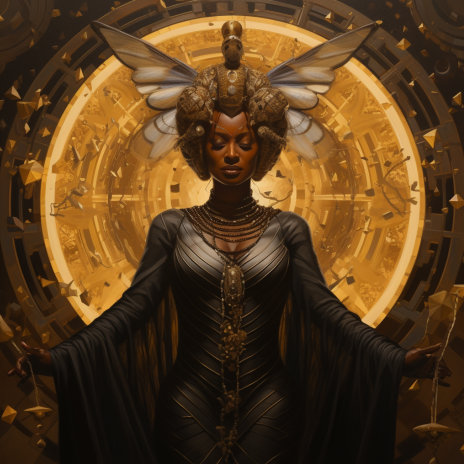
In Greek mythology, these equine entities are referred to as hippocampi. Notably, the hippocampus within our anatomy pertains to the brain region responsible for memory and learning, intertwined with our interpretations that shape our navigation through experiences. Now, focusing on Deborah and Barak’s significant battle with Sisera, let’s delve into the intricate details. Observe the nuances: Deborah, symbolizing speech, manifestation, and bee-like industriousness, along with the appellation “Lapidoth,” connoting lightning or a torchbearer. She takes her seat beneath a palm tree and administers judgment between Ramah, signifying exaltation, and Bethel, the House of God. Meanwhile, Barak’s name, translating to “lightning,” conveys the notion of sudden enlightenment dispelling ignorance. He equates to Jupiter or Zeus, the figure overseeing Sagittarius. Importantly, Barak also embodies Pabilsag from Babylonian folklore, a prototype for the centaur in Sagittarius. Pabilsag serves as a prime ancestor, guiding souls through the Milky Way, transforming them into stars before their earthly return. Therefore, Barak, Pabilsag, and Zeus embody ancestral spirits endowed with enlightening bursts and innovative inspiration. They aid in dispelling demonic entities or ghosts. Pabilsag’s consort, Ninisina or Gula, a she-goat, parallels Yael’s role, meaning “Goat,” who assists Barak in battle.
Now, let’s remain situated within the confines of Mount Tabor, a symbol for the astral and causal dimensions, heavens, and even hells. Within this realm resonates the sacred sounds or frequencies, the foundation of creation. Termed “qolote” in the Torah, these are often translated as “voices” or “sounds.” Exodus 20:18 references “thundering,” yet the original Hebrew employs “qolote.” Adjacent to “qolote,” the word “Lapid” translates as “torch” or “lightning,” the same root as “Lapidoth” in Deborah’s name. In the goddess Dameter’s tale, she wields a torch to venture into the underworld in search of her daughter. The underworld embodies the spiritual subconscious realm, serving as the bedrock of our physical reality.
Deborah, seated beneath a palm tree, emblematic of the spine, alludes to the Phoenix, hinting at Kundalini rising. This ascent unifies with the bindu or nada, the sacred sounds of creation, offering a glimpse into the spiritual realm. Through silent stillness, the senses dissolve, allowing entry into the spiritual realm, liberating one from the confines of bodily ignorance. The lightning signifies the white light and the sensation of electrical currents coursing through the astral body. The merging of pure consciousness and Apana (dealing with the outward release of negative energy) or Kundalini energy, when not released through sex, leads to its rise and unification with consciousness. This energy traverses each chakra, inducing distinct sounds and vibrations.
Barak’s call to Zebulon and Naphtali holds significance. Zebulon, linked to Capricorn, the sea goat, symbolizes ascending from the unconscious to civilize humanity—the creative astral realm’s energy. Naphtali, associated with Pisces, embodies the dissolution into pure consciousness. As Sisera’s army falters, he flees, only to meet his end at the hands of Yael, whose name signifies “Goat.” This act reaffirms the Capricorn energy’s ability to dispel subconscious thoughts. Remember, the battle transpired in Jezreel, embodying the seeds planted within the subconscious. Before Sisera’s demise, Yael offers him milk, symbolizing the brain’s serum or soma secreted after the transmutation of sexual energy, eventually quieting the senses.
You can enhance or support this rising through Bhramari pranayama, a practice associated with the Bee goddess or DEBORAH, whose name means “Bee.” During this practice, you concentrate your gaze between your brows while keeping your eyelids shut, then cover your ears (akin to Yael’s mantle over Sisera) and emit a resonating, guttural humming sound resembling a bee. This sound echoes the primordial resonance present during creation before the emergence of time and space.
Bnai Elohiym signify the gods within your super ego, a higher aspect of your consciousness. Sons of Adahm represent the ego, the conscious self. Nephiliym epitomize the ID, embodying instinctual and primal desires.
© Adahmic Institute Inc 2023 All rights reserved. Unauthorized use and/or duplication of this material without express and written permission from this site’s author and/or owner is strictly prohibited.